
Butterfly Pea Flower Herbal Tea: 5 Powerful Health Benefits with Magic Recipes
In the landscape of modern wellness, few ingredients are as visually arresting or as biologically intriguing as butterfly pea flower herbal tea. Known scientifically as ‘Clitoria ternatea’, this vibrant blue infusion has transitioned from a traditional Southeast Asian staple to a global functional beverage phenomenon. Often referred to as “Blue Tea,” this herbal infusion is celebrated not just for its mesmerizing color-changing properties, but for a robust profile of antioxidants that support cognitive function and metabolic health [1], [10].
What is Butterfly Pea Flower Herbal Tea?
Butterfly pea flower herbal tea is a caffeine-free infusion made from the dried petals of the ‘Clitoria ternatea’ plant. Native to equatorial Asia, particularly Thailand and Vietnam, the plant is a vigorous creeper known for its striking cobalt-blue flowers.
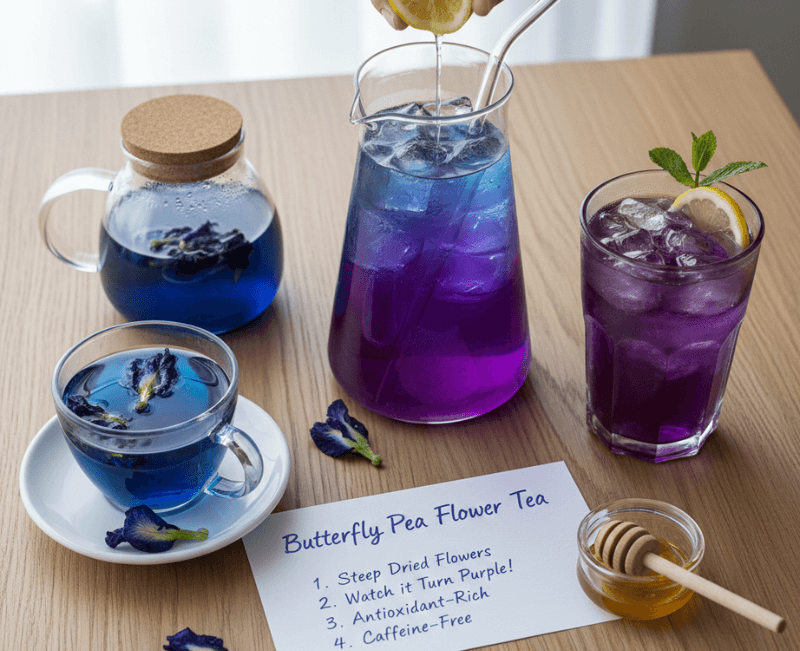
The most famous characteristic of this tea is its pH sensitivity. The deep blue liquid contains high concentrations of anthocyanins. When the tea is mixed with an acidic ingredient—like lemon or lime juice—the pH level drops, causing the color to shift from a serene blue to a vivid magenta or deep purple [5], [9].
Health Benefits of Butterfly Pea Flower Herbal Tea
Authority sources in pharmacology and nutrition have identified several key bioactive compounds, primarily ‘ternatins’ (a type of anthocyanin), which provide the following benefits:
Rich in Potent Antioxidants
The primary health appeal lies in its high concentration of antioxidants. Research indicates that ternatins help reduce oxidative stress and inflammation in the body [2], [10]. These antioxidants are comparable to those found in green tea and blueberries.
Supports Skin and Hair Health
Studies suggest that the flower’s antioxidants can help support collagen structure and skin elasticity [3]. Additionally, bioflavonoids may stimulate blood flow to the scalp, potentially strengthening hair follicles [4], [7].
Cognitive and Brain Support
In traditional Ayurvedic medicine, Clitoria ternatea has been used as a “Medhya Rasayana” (brain tonic). Modern preliminary studies show the extract may increase levels of acetylcholine, a neurotransmitter essential for memory and learning [5], [8].
Blood Sugar Regulation
Clinical evidence suggests the tea may help inhibit enzymes (like alpha-glucosidase) that break down carbohydrates, potentially helping to stabilize blood sugar levels after meals [6], [10].
Aids Weight Management
Research indicates that ternatins in the extract can inhibit adipogenesis—the formation and maturation of new fat cells—by regulating signaling pathways like PPAR-γ to block lipid synthesis [11], [12]. Furthermore, by inhibiting digestive enzymes, the tea helps prevent insulin spikes that are often responsible for fat accumulation [13].
Culinary Recipes
Because this tea is a herbal infusion, it is naturally caffeine-free, making it an excellent choice for any time of day.
| Recipe | Key Ingredients | Prep Highlight |
|---|---|---|
| Traditional Hot Brew | Dried flowers, hot water, honey/ginger | Steep for 5–7 minutes at 90°C. |
| Magic Lemonade | Blue tea, lemon juice, ice, syrup | Add citrus to trigger the purple color shift. |
Traditional Hot Brew (Nam Dok Anchan)
1. Steep 5–10 dried flowers in 1 cup of hot water (approx. 90°C).
2. Let sit for 5–7 minutes.
3. Strain the petals for a vivid blue infusion with an earthy, bean-like flavor [7], [8].
The “Magic” Color-Changing Lemonade
1. Fill a glass with ice and cooled blue tea.
2. Slowly pour 1–2 tablespoons of fresh lemon juice over the top.
3. Watch as the pH change transforms the drink from blue to vibrant purple [7], [9].

Conclusion
Whether you are drawn to it for its striking visual appeal or its impressive array of antioxidants, butterfly pea flower herbal tea is a versatile addition to any wellness routine. From supporting cognitive health to providing a caffeine-free alternative to traditional teas, the benefits of this “blue gold” are backed by both centuries of tradition and emerging modern science [10].